|
Wilderlab Newsletter͏ ͏ ͏ ͏ ͏ ͏ ͏ ͏ ͏ ͏ ͏ ͏ ͏ ͏ ͏ ͏ ͏ ͏ ͏ ͏ ͏ ͏ ͏ ͏ ͏ ͏ ͏ ͏ ͏ ͏ ͏ ͏ ͏ ͏ ͏ ͏ ͏ ͏ ͏ ͏ ͏ ͏ ͏ ͏ ͏ ͏ ͏ ͏ ͏ ͏ ͏ ͏ ͏ ͏ ͏ ͏ ͏ ͏ ͏ ͏ ͏ ͏ ͏ ͏ ͏ ͏ ͏ ͏ ͏ ͏ ͏ ͏ ͏ ͏ ͏ ͏ ͏ ͏ ͏ ͏ ͏ ͏ ͏ ͏ ͏ ͏ ͏ ͏ ͏ ͏ ͏ ͏ ͏ ͏ ͏ ͏ ͏ ͏ ͏ ͏ ͏ ͏ ͏ ͏ ͏ ͏ ͏ ͏ ͏ ͏ ͏ ͏ ͏ ͏ ͏ ͏ ͏ ͏ ͏ ͏ ͏ ͏ ͏ ͏ ͏ ͏ ͏ ͏ ͏ ͏ ͏ ͏ ͏ ͏ ͏ ͏ ͏ ͏ ͏ ͏ ͏ ͏ ͏ ͏ ͏ ͏ ͏ ͏ ͏ ͏ ͏ ͏ ͏ ͏ ͏ ͏ ͏ ͏ ͏ ͏ ͏ ͏ ͏ ͏ ͏ ͏ ͏ ͏ ͏ ͏ ͏ ͏ ͏ ͏ ͏ ͏ ͏ ͏ ͏ ͏ ͏ ͏ ͏ ͏ ͏ ͏ ͏ ͏ ͏ ͏ ͏ ͏ ͏ ͏ ͏ ͏ ͏ ͏ ͏ ͏ ͏ ͏ ͏ ͏ ͏ ͏ ͏ ͏ ͏ ͏ ͏ ͏ ͏ ͏ ͏ ͏ ͏ ͏ ͏ ͏ ͏ ͏ ͏ ͏ ͏ ͏ ͏ ͏ ͏ ͏ ͏ ͏ ͏ ͏ ͏ ͏ ͏ ͏ ͏ ͏ ͏ ͏ ͏ ͏ ͏ ͏ ͏ ͏ ͏ ͏ ͏ ͏ ͏ ͏ ͏
|
Kia ora koutou, Welcome to the latest edition of The Extract, a roundup of highlights from the wilderness over the last couple of months. In this issue we give some updates on: new assays joining our freshwater panels, new wetland sampling kit available, a spotlight on the curious mudfish, the in-depth eDNA projects recently funded through the EPA’s Wai Tuwhera o te Taiao programme, and a notice about eDNA data sharing on our Explore map.
|
|
Updates to our freshwater assay panels
|
|
Firstly, we wanted to highlight how valuable feedback from our eDNA community is as we strive to improve the technology and our services we provide. We are especially interested to hear if and when your eDNA results may have missed something important, or if it picks up something unexpected. A recent example of this, was when a client reached out us when both shortjaw and giant kōkopu hadn’t shown up in some eDNA samples taken from where they had been expected to be present.
|

|
On a deeper inspection of the DNA sequences, we found that one of our standard fish tests is unable to distinguish between these two species due to an identical shared genetic barcode, which is kind of like trying to tell your kids apart when they have the same haircut! While our basic freshwater package contains six different tests that can pick up fish, and most of these tests can distinguish between the different kōkopu species, this resolution issue does impact the overall sensitivity for fish monitoring in Aotearoa. |
|
|
Similarly, we’ve also had feedback about instances where eDNA results have overlooked kōura; both a culturally and ecologically significant freshwater crayfish. The main cause for this has been that our assays in our basic freshwater package are focused on fish and insects species, with none specifically targeting crustaceans with high sensitivity. |
|

|
|
|
Based on this feedback and in light of newly available reference data, we’ve decided to review our freshwater assay panel and make some minor adjustments to improve the sensitivity and resolution for these key taxa. This review has led to three main adjustments to our assay panels: modifying our general crustacean assay to be more specific for kōura and kēwai (Paranephrops spp.), replacing a recently-developed fish assay with a more high-resolution and galaxiid-focused cytochrome b assay, and modifying one of our general vertebrate assays to be more specific for native galaxiids (including shortjaw and giant kōkopu, īnanga, mudfish, and other non-migratory galaxiids such as Clutha and Taieri flatheads).
The resulting adjustments have significantly improved the detection rates for both galaxiids and kōura, without affecting sensitivity for other key organisms and groups. These changes will take effect from 1 November. The majority of tests will not be affected, and if you need to compare old and new datasets, you can set a filter on the ‘Target’ column in the eDNA excel spreadsheet (‘full’ sheet) and only retain the assay codes that are consistent between both datasets. If you have ongoing projects and would prefer the original assay panel for consistency, please let us know when ordering your tests through our online submission portal. For more information on the freshwater testing panel revisions, please see the details in the revision document here.
|
|
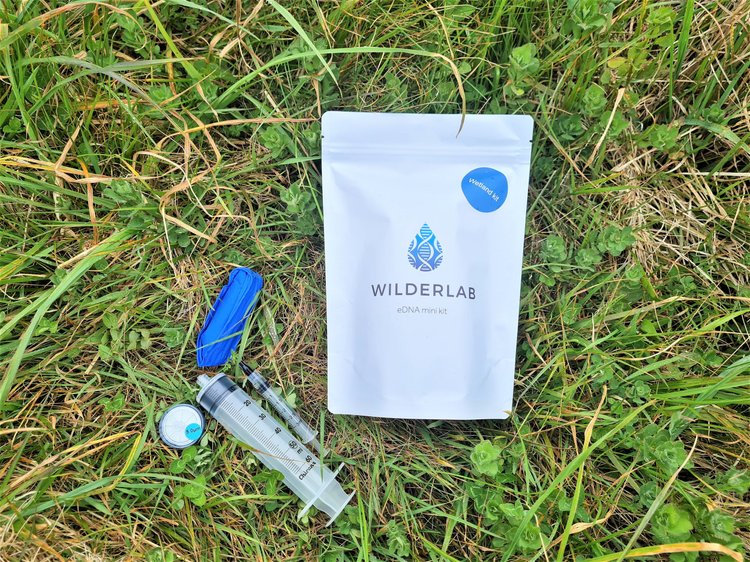
Springing into wetland monitoring season Just in time for the kickoff of the wetland monitoring season, we would like to introduce Wilderlab’s wetland syringe kit which will be joining our active filtration range in the freshwater monitoring toolbox!
|
|
Perhaps unsurprisingly, sampling eDNA in slow-mixing, standing environments is quite different to sampling in high-mixing, flowing environments like rivers which continually deliver genetic material on a ‘natural conveyor belt’. There is also often more suspended algae and other organic material floating around in these waters, making the filtering of eDNA more difficult. We have been hard at work trialing different filter combinations with the goal of removing as much excess algal material whilst still retaining maximum eDNA yield for eDNA monitoring in wetlands. This new design is very similar to our popular syringe mini kit, except it includes a specialized capture filter which is more suited for higher algal loaded aquatic environments. We are excited to see that there are several research projects being carried out over the next year to grow our understanding of how eDNA behaves in these environments and look forward to be able to share guidance on monitoring protocols as we continue to learn more. Until then, the Wilderlab team recommends the use of the wetland kit when working in slow-mixing, higher algal-loaded, aquatic environments. If you have any questions about the new wetland kit, or if you’re unsure if it would work best for your sampling, feel free to get in touch with our team at info@wilderlab.co.nz.
|
|
Critter of the month - monitoring mysterious mudfish Continuing on with the wetland theme, this month's critter we’d like to highlight is Aotearoa’s miraculous mudfish! There are five known species of mudfish throughout the country, all known for their cryptic, nocturnal behaviour. Unlike most fish species, mudfish can survive in areas where there is no surface water, in the margins of wetlands and swamps - they can even breathe through their skin! (Department of Conservation). Mudfish species are all classed as ‘Threatened’ or ‘At Risk’ according to the New Zealand Threat Classification System, which is largely due to their heavy reliance on specific wetland habitats which are often under threat from drainage, drought, and land conversion. In order to protect these rare populations, we need robust tools to help monitor their distribution to know how and where best to focus restoration efforts. There are a range of sampling techniques which can be used for trying to monitor these mysterious mudfish, though this can be difficult for a handful of reasons: Their preferred wetland habitat can be difficult to move through and sample adequately due to limited access, they live in variable habitat types and water depths, and their preferred habitats are often fragile and vulnerable to human disruption (Ling et al., 2009).
These factors make the use of eDNA an appealing potential tool in the mudfish monitoring toolbox. We’re currently able to detect all five species of mudfish at species level on both our basic and comprehensive assay panels, and with the use of our new wetland kit, active eDNA filtering in wetland habitats is easier than ever!
|
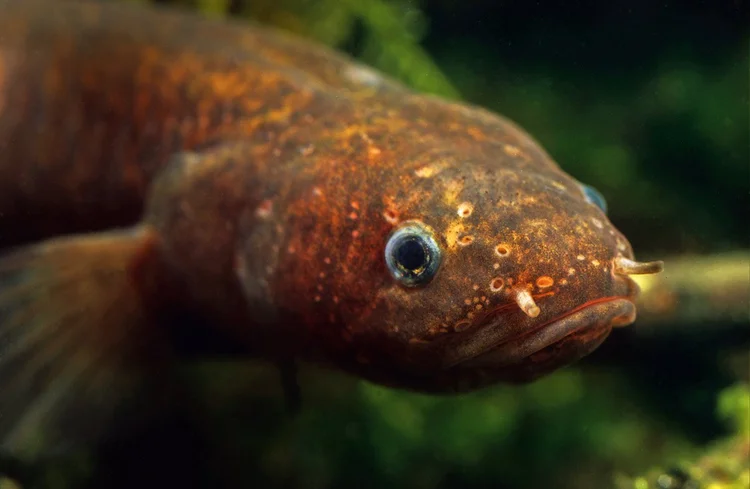
Image of brown mudfish (Neochanna apoda). Sourced: Department of Conservation, taken by Rod Morris. |
|
|
|
|
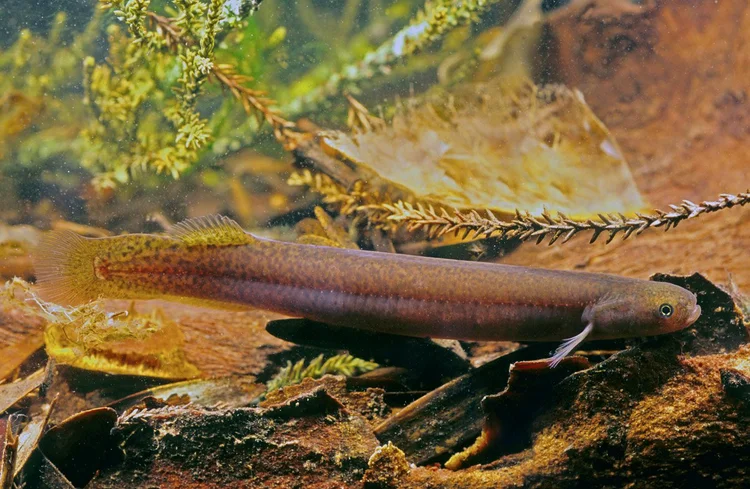
Image of a black mudfish (Neochanna diversus). Sourced: Department of Conservation, taken by Rod Morris. |
|
|
|
As we discussed in the section above, because wetland environments are slow-mixing, the dispersal of eDNA is much less predictable and more ‘patchy’ throughout wetland habitats than in flowing environments. Finding the optimal sampling protocol for different wetland areas is difficult, and several of our clients are trialing eDNA alongside their traditional trapping methods to gain a better understanding of detection probabilities between the two methods. At this stage, if you’re looking to use eDNA to assist in your upcoming mudfish surveys, we recommend taking a targeted approach to choosing your eDNA sample sites. This means choosing areas which you’d suspect to be suitable mudfish habitat, such as wetland margins and shallow reed areas. We also recommend, where possible, to increase your sampling replication to reduce the potential for false negatives. Just as you’d expect with trapping methods, choosing ecologically logical sample areas and taking a replicates is still the best way to reduce false negatives. When sampling in any still, aquatic environment, the potential for accidental site contamination increases. Remember to refrain from entering the water where you are sampling to minimize the introduction of carry over DNA from boots, waders, and other survey equipment. Some of our clients are trialing the use of a compositing approach; using sterile scoops to collect water from around the wetland into a sterile bucket and taking syringe replicates from there. If using this approach, remember to use extreme caution to minimize sample contamination especially when working across several wetland systems in close succession. We’ll be providing updates as results from new pilot studies become available, but as always, if you have any questions regarding anything eDNA related, don’t hesitate to contact our team at info@wilderlab.co.nz for the latest updates.
|
|
References: 1) Department of Conservation, Te Papa Atawhai (Accessed: 2022, October 20). Mudfish. https://www.doc.govt.nz/nature/native-animals/freshwater-fish/mudfish/ 2) Ling, N., O’Brien, L.K., Miller, R. & Lake, M. (2009). Methodology to survey and monitor New Zealand mudfish species. CBER Contract Report No. 104. Hamilton, New Zealand: Department of Conservation and Centre for Biodiversity and Ecology Research, Department of Biological Sciences, School of Science and Engineering, The University of Waikato.
|
|
Wai Tuwhera o te Taiao funds 21 community led in-depth eDNA monitoring projects The Environmental Protection Authority NZ have recently announced 21 community led eDNA projects which they will be funding through their Wai Tuwhera o te Taiao programme. Previously, the programme has focused on introducing different community groups, schools/kura, iwi and hapū to the basics of eDNA technology, offering single sample kits and testing for communities to explore waterways in their area with a new lens. These new eDNA projects go beyond single sample explorations and delve deeper into ecological baselines, long-term monitoring, and species distribution surveys to help groups towards their environmental protection goals. These communities will be using the current ‘gold-standard’ sampling protocols currently being used by Regional and District Councils around the country - how’s that for community action!! You can read more about each of these amazing projects on the EPA’s website here, and you can keep up with other opportunities and news from the Wai Tuwhera o te Taiao team through their pānui here.
|
|
Sharing your eDNA results on the Explore map
|
|
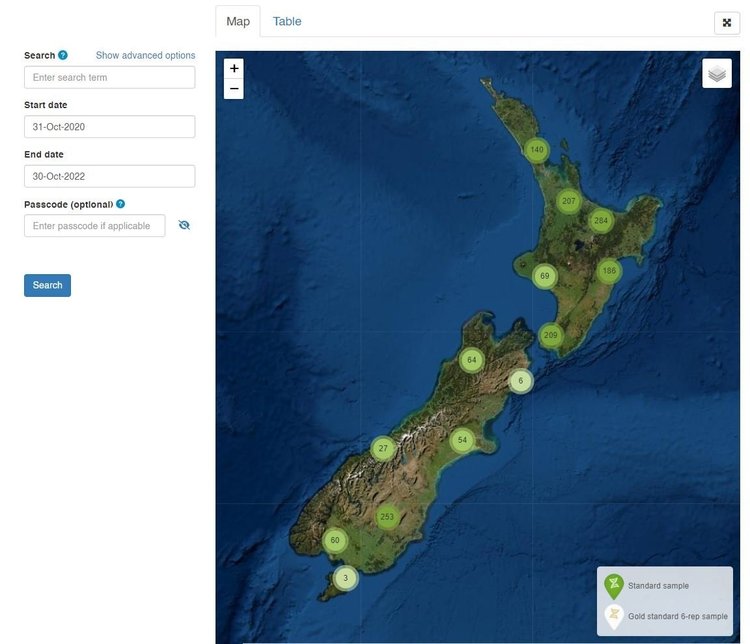
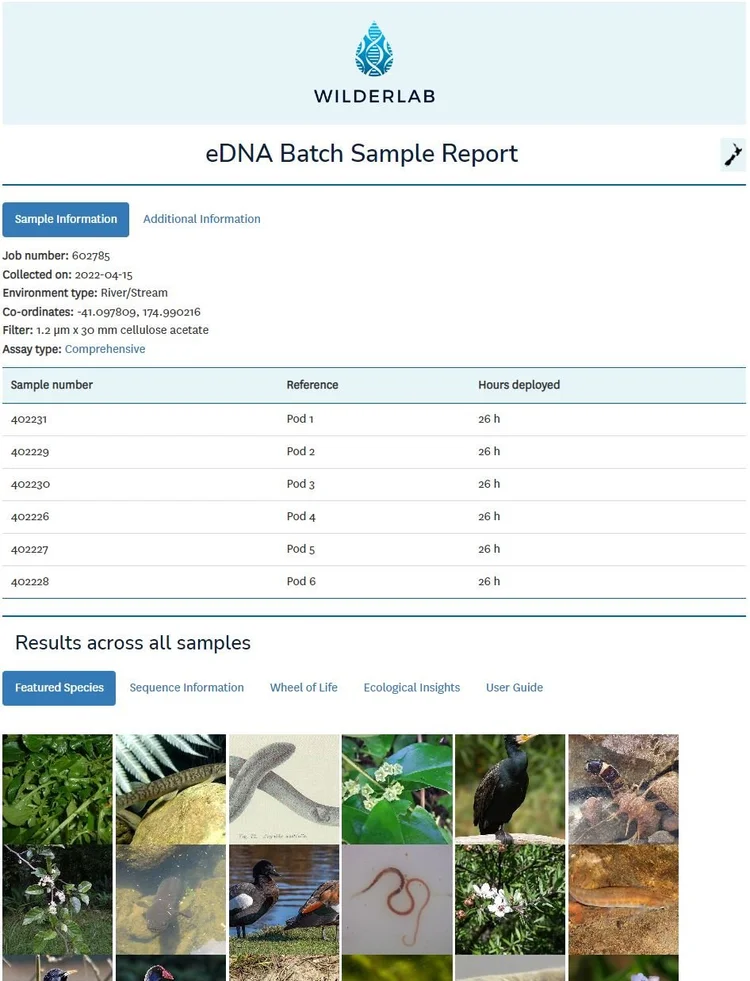
You may have noticed that we’ve made extensive updates to our online sample reports which can be accessed through our online Explore map. We’ve designed these online reports to help improve the accessibility of eDNA information and help you to better communicate and interpret your eDNA results.
|
|
These sample reports are generated for all eDNA samples we process and are a part of our regular data delivery service. We recognise that there are several important reasons why some of our clients would prefer to keep their data private, which is why all of these reports are passcode-protected by default unless specifically requested to make publicly accessible. |
|
|
|
Recent conversations with some of our clients have, however, brought to our attention that lots of eDNA results which are currently held privately, are so due to it a) being the default option and b) from the long-forgotten tick on our online sample submission form to ‘decide later’. Currently, about 2/3 of of the data held on our server is held privately, with a large proportion of those data private by default. If this sounds like this could be the case for your eDNA results, this is a reminder that you can update your sample privacy status at any time by contacting our wonderful team!
|
|
For any publicly shared samples, anyone is able to access these reports and download the taxon results and sequence information via the map. This public information is a useful resource for anyone with an interest in Aotearoa’s biodiversity, water quality, and biosecurity, enabling a wider reach and benefit for others in your community. It also contributes to a wider understanding of species distributions which can be particularly important for tracking and monitoring invasive species spread which some regional councils in particular have been finding highly useful.
|
|
If you’d like to make any of your eDNA results accessible to the public, or you want to learn more about what sharing this data means, feel free to email our team at info@wilderlab.co.nz.
|
|
Not getting these newsletters? You can sign up to receive regular updates from us at wilderlab.co.nz/subscribe (we don’t send them as often as we should, so you’re at no risk of getting spammed). Until next time, hei konā mai, |
|

|
|
|
|
|
|