|
Wilderlab Newsletter͏ ͏ ͏ ͏ ͏ ͏ ͏ ͏ ͏ ͏ ͏ ͏ ͏ ͏ ͏ ͏ ͏ ͏ ͏ ͏ ͏ ͏ ͏ ͏ ͏ ͏ ͏ ͏ ͏ ͏ ͏ ͏ ͏ ͏ ͏ ͏ ͏ ͏ ͏ ͏ ͏ ͏ ͏ ͏ ͏ ͏ ͏ ͏ ͏ ͏ ͏ ͏ ͏ ͏ ͏ ͏ ͏ ͏ ͏ ͏ ͏ ͏ ͏ ͏ ͏ ͏ ͏ ͏ ͏ ͏ ͏ ͏ ͏ ͏ ͏ ͏ ͏ ͏ ͏ ͏ ͏ ͏ ͏ ͏ ͏ ͏ ͏ ͏ ͏ ͏ ͏ ͏ ͏ ͏ ͏ ͏ ͏ ͏ ͏ ͏ ͏ ͏ ͏ ͏ ͏ ͏ ͏ ͏ ͏ ͏ ͏ ͏ ͏ ͏ ͏ ͏ ͏ ͏ ͏ ͏ ͏ ͏ ͏ ͏ ͏ ͏ ͏ ͏ ͏ ͏ ͏ ͏ ͏ ͏ ͏ ͏ ͏ ͏ ͏ ͏ ͏ ͏ ͏ ͏ ͏ ͏ ͏ ͏ ͏ ͏ ͏ ͏ ͏ ͏ ͏ ͏ ͏ ͏ ͏ ͏ ͏ ͏ ͏ ͏ ͏ ͏ ͏ ͏ ͏ ͏ ͏ ͏ ͏ ͏ ͏ ͏ ͏ ͏ ͏ ͏ ͏ ͏ ͏ ͏ ͏ ͏ ͏ ͏ ͏ ͏ ͏ ͏ ͏ ͏ ͏ ͏ ͏ ͏ ͏ ͏ ͏ ͏ ͏ ͏ ͏ ͏ ͏ ͏ ͏ ͏ ͏ ͏ ͏ ͏ ͏ ͏ ͏ ͏ ͏ ͏ ͏ ͏ ͏ ͏ ͏ ͏ ͏ ͏ ͏ ͏ ͏ ͏ ͏ ͏ ͏ ͏ ͏ ͏ ͏ ͏ ͏ ͏ ͏ ͏ ͏ ͏ ͏ ͏ ͏ ͏ ͏ ͏ ͏ ͏ ͏
|
Kia ora koutou, Welcome to the latest edition of The Extract, a roundup of highlights from the eDNA Wilderness. In this issue we’re sharing on: Introducing the Taxon-Independent Community Index (TICI) Celebrating the Kāwai Kaimai project in Ngongotahā National Freshwater Conference at Te Papa Wilderlab’s new ordering and quotation platform Exploring spiderwebs for eDNA eDNA in the news No price review for 2024
|
|
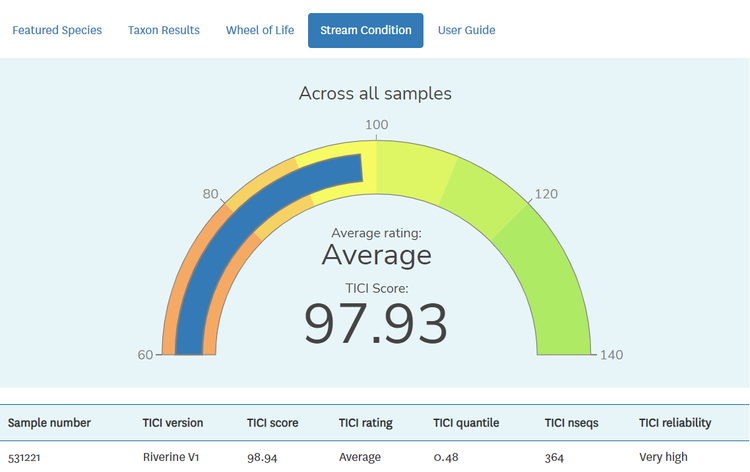
Highlighting the Taxon-Independent Community Index (TICI) New Zealand's rivers and streams are in serious trouble. Decades of pollution, overextraction, and habitat destruction have left many of our waterways unswimmable, both for us and the precious taonga species that call our waters home. Compounding this is a deeply fragmented system of environmental monitoring, reporting and accountability. Recognising the shortcomings of our biodiversity monitoring toolbox, our team collaborated with scientists from the Department of Conservation, Ministry for the Environment, Regional Councils, and Waikato, Curtin and Otago Universities to develop the Taxon-Independent Community Index (TICI), a new eDNA-based scoring system for measuring ecosystem health for rivers and streams. In developing the TICI, we identified 3,000 DNA barcodes commonly found in New Zealand’s waterways that serve as valuable indicators of ecological health. These encompass organisms from across the tree-of-life, from microbes right through to mammals, with many still new to science. An average 1L river sample will contain between 200-500 of these barcodes and the TICI distils this complex molecular information down to a single easy-to-interpret metric. This leads to a more rigorous and stable score that are less susceptible to noise than its counterpart the Macroinvertebrate Community Index (MCI). Each site’s TICI score reflects an overarching measure of health, which can be used to rank river sites from ‘Poor’ to ‘Pristine’ throughout the motu.
|
|
The TICI is a simple and powerful tool which comes with all the benefits of eDNA monitoring, including the early detection of invasives and the hidden habitats of rare and threatened species. Best of all, it can be done quickly and easily, without harming our friends who call the awa home. In keeping with the Wilderlab spirit, we’re especially excited that it makes top-grade biomonitoring accessible to anyone – using an eDNA kit, even the youngest primary school students can generate and understand professional-grade ecosystem health data.
|
|
You may have seen the TICI stream health dial appear on your online sample reports, as we include the TICI index free-of-charge with any Comprehensive package where the sample is taken from a river or stream anywhere throughout Aotearoa.
|
|

|
We’re incredibly proud of this new tool and hope that it will continue to aid the vital work being done to protect and restore our precious freshwater ecosystems. You can read the published TICI paper here and a recent news article from The Conversation here. |
|
|
|
|
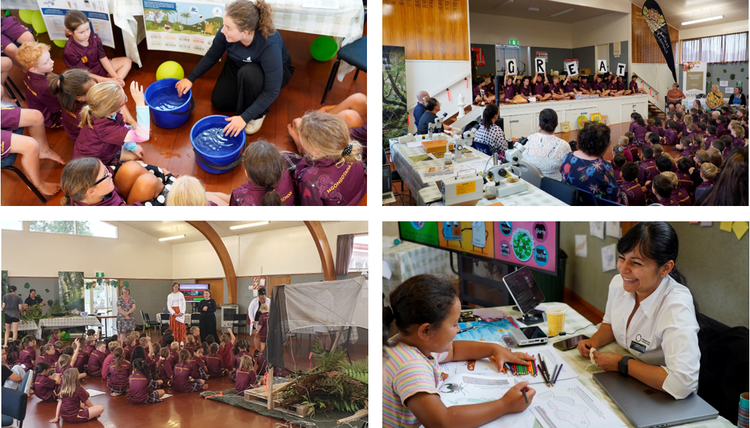
Celebrating the Kāwai Kaimai project in Ngongotahā In February, a GREAT three-day event saw over 1,500 students, teachers, parents, and other community members come together to share and celebrate the progress of the Kāwai Kaimai partnership in Ngongotahā. This is a new collaborative project between Tura Ngāti te Ngākau, Kaimai Kaponga and a Biological Heritage funded programme working towards a state-of-the-art biosecurity surveillance system which includes collaborators from University of Canterbury, Manaaki Whenua Landcare Research, Scion, Wilderlab and Toi ki Tua.
|
|
The focus of this kaupapa is the restoration of the mauri (life force) of the Ngāhere (forest) in the Southern Kaimai Mamaku Range, enhancing local skills and capabilities for the ongoing monitoring of important ngā ngārara (insects) to assess Ngāhere health. As part of this project, six tertiary student interns were hosted over the summer to work alongside kaitiaki and other experts to grow their understanding and confidence in new genetic monitoring tools for conservation and biodiversity monitoring in the Kaimai Ngāhere. Over the three day event, the team worked with our community science lead, Amy Gault, to showcase their learnings and the goals of their work to the wider community.
|

|
“Kāwai hekenga - This is the terminology when referencing a line of genealogy as a whole. So, Kāwai Kaimai would be the descendants of our Kaimai and also the thought of our partnership with Kaimai Kaponga”
– Stevee Rae Raumeti, Tura Ngāti te Ngakau |
|
|
|
There were interactive stations to examine different ngārara under microscopes and see pinned collections, learn about significant pests and trapping methods from Kaimai Kaponga, participate in DNA barcoding activities, and get hands-on experience with eDNA sampling. There were also plenty of creative activities to explore the deep concepts of Ngāhere health, kaitiakitanga, conservation, and sustainability informed by iwi aspirations. Throughout the partnership, the Kāwai Kaimai team has maintained a specific focus on eDNA, examining key ngā ngārara groups vital to the Kaimai Ngāhere to ease the strain on resourcing for ongoing monitoring. They're also contributing to the creation of new reference barcodes to enhance a reference library for the region, working towards a tikanga framework for future projects. The team is attending the upcoming Bioheritage Crazy Ambitious conference next week to present on this kaupapa so make sure you head along to hear more.
|
|
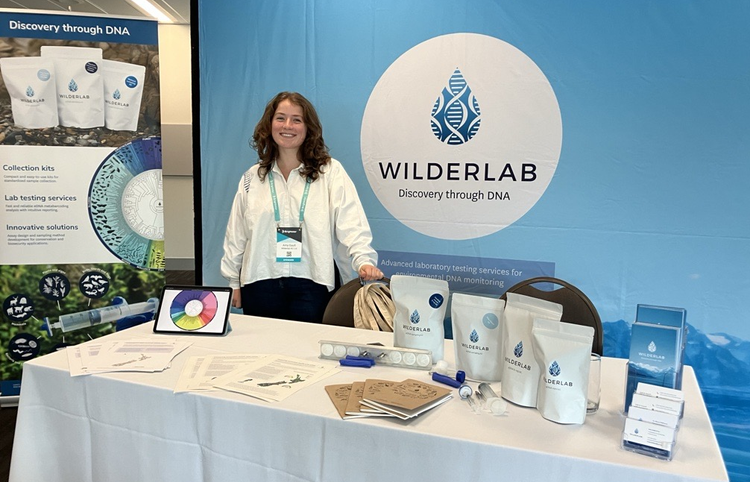
National Freshwater Conference this week in Wellington We attended this year’s National Freshwater Conference, which brought together freshwater experts, regulators, policy makers, planners and stakeholders to discuss what the future could have in store for New Zealand’s freshwater management legislation. Thank you to all that stopped by for a kōrero. There was an exciting mix of new ideas for applying eDNA tools, as well as some warming stories about unexpected species finds from projects past.
|
|
Given the many uncertainties felt throughout the freshwater community, it was reassuring to hear of so many initiatives and projects dedicated to sustaining local relationships and commitments for upholding Te Mana o te Wai. |
|
|
|
Wilderlab’s new ordering and quotation platform We've seen significant growth in demand for our eDNA sampling kits, which has prompted us to make some updates to our ordering platform to ensure we continue our efficient dispatch workflow. On this upgraded platform, individual customers are required to create a unique login for placing orders. This is different from organisational billing accounts. However, linking these accounts is straightforward and allows invoices to be sent directly to your affiliated organisation — simply include your account number and billing address. Additionally, your ordering history will be linked to your account, enabling you to easily save your contact and delivery information and track previous orders. This form also includes new functionality for requesting quotes, streamlining the process of obtaining quick and accurate cost details for quoting work and generating necessary purchase order information.
|
|
This new platform is now up and fully operational, so if you haven’t done so already, head over to create an individual account so you’re all set the next time you need to order some eDNA kits. If you have any trouble setting up your sign in for the first time, our team is here to help on 0800 336 295 or through info@wilderlab.co.nz.
|
|
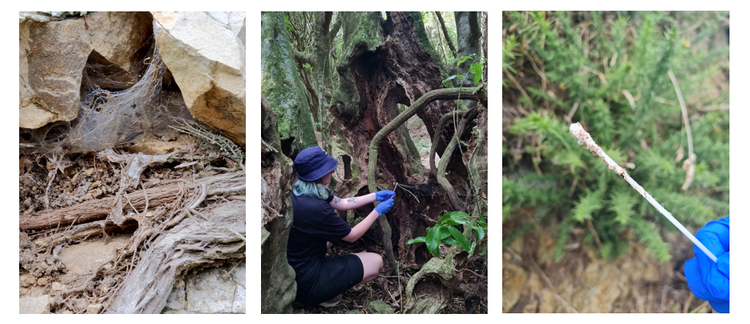
Exploring spiderwebs for eDNA Exciting new research has recently been published by colleagues at Curtin University in Perth, which explores the use of spiderwebs as natural passive filters to sample airborne eDNA. Since land-based plants and animals pose greater detection challenges with current eDNA methods compared to their aquatic counterparts, innovations in terrestrial approaches are of particular interest for us. This is especially true given the significance of Aotearoa's unique birds and the impact of invasive mammal species.
|
|
Some of the Wilderlab team embarked on a field day to a nearby trail to collect spiderweb samples for a proof-of-concept study. This initial batch of samples revealed DNA from a diverse range of species, notably including a variety of mammals, fungi, and plants. Encouraged by these results, our team is now planning to collect webs from a native bush area, known for its richer bird life, to see if we can observe the expected differences in biodiversity. We’ll be heading along to Canberra in June to meet with our Australian colleagues to discuss these types of innovations and the frontiers of ‘airDNA’. We look forward to sharing more as we uncover more in this sticky space!
|
|
Recent eDNA making news Since our last issue, there have been a lot of interesting articles and news stories coming out from around the motu. Take a look at a few of the top stories below:
|
|
No Wilderlab price revisions for 2024 Given the tightening of budgets and uncertainties in many monitoring projects, we have decided not to do a price review in 2024. We will aim to revisit our pricing in June 2025.
|
Not getting these newsletters? You can sign up to receive regular updates from us at wilderlab.co.nz/subscribe. Until next time, hei konā mai, The Wilderlab Team |
|

|
|
|
|
|
|